
Stall note
The Solar Dance of Sunflowers: Unveiling the Secrets of Heliotropism
Sunflowers, those captivating specimens of nature, unveil a dynamic aspect of plant life, challenging the notion of their static existence. Unlike the perception of plants as immobile entities, these particular flowers actively orient themselves toward the sun, tracing its journey from the eastern horizon to its western descent.
Leo Everett
Curator note
Stall tip
The full note continues below on the linen catalog desk.
Aisle
Stall Desk
Sunflowers, those captivating specimens of nature, unveil a dynamic aspect of plant life, challenging the notion of their static existence. Unlike the perception of plants as immobile entities, these particular flowers actively orient themselves toward the sun, tracing its journey from the eastern horizon to its western descent.
But why do sunflowers exhibit this fascinating behavior?
This tendency to face the sun is predominantly noticeable in young flowerheads, tapering off as the flower matures (with mature sunflowers typically orienting themselves eastward). The enthralling phenomenon of flowers diligently tracking the sun's course is known as heliotropism.
Similar to humans, plants possess internal biological clocks, referred to as circadian rhythms. Just as a person's circadian rhythm triggers various physiological and chemical changes over approximately 24-hour cycles, a plant's circadian rhythm enables it to respond to environmental shifts in a similar time frame.
How do sunflowers achieve this sun-tracking feat?

Before sunrise, a young sunflower turns to the east, greeting the emerging sun. Throughout the day, it dynamically follows the sun's trajectory westward. As the sun sets, the flower reorients itself eastward, ready to repeat the cycle with the next sunrise.
A study published in the journal Science in 2016 proposed an intriguing explanation for this behavior. Researchers suggested that sunflowers engage in heliotropism because their stems undergo differential growth at different times of the day.
Their observations revealed a fascinating pattern: as the sun moves from east to west, the east side of a sunflower stem experiences faster growth than the west side. This uneven growth causes the flower to lean toward the sun. Conversely, during sunset, the growth on the west side surpasses that on the east side, prompting the flower to return to its original position facing east.
Adding complexity to their investigation, researchers immobilized some sunflower stems or redirected them away from the sun. The results were noteworthy – plants with restricted movement exhibited reduced biomass and a smaller leaf area compared to undisturbed ones.
To delve deeper, the responsiveness of sunflower plants to light was tested under artificial lighting conditions. The findings indicated that the plants could effectively track light movements within a 24-hour cycle but struggled when the artificial day approached a 30-hour cycle.
The unequal growth on either side of the sunflower stem is attributed to auxins, plant hormones that stimulate growth.
So, why do sunflowers, particularly young ones, faithfully face the sun?
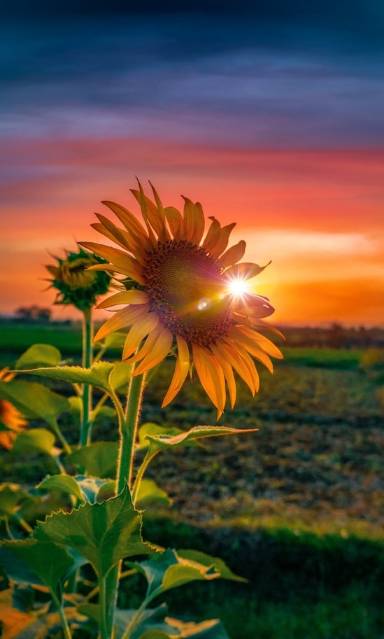
The answer lies in the advantage it provides during the critical phase of reproduction. Young sunflowers, with their green "bracts" resembling a mane and leaves positioned beneath the flower facing the sun, actively practice heliotropism. This behavior maximizes photosynthesis, and during pollination, it ensures the flower is conspicuous to pollinators, primarily insects.
Facing east proves advantageous, as the flowers warm up quickly, attracting more pollinating insects. In fact, when researchers compared mature east-facing blooms with those artificially turned westward, the former attracted five times as many pollinators.
In the intricate dance of heliotropism, the sunflower gains a strategic edge in the quest for reproduction, showcasing the dynamic and purposeful nature of these seemingly stationary botanical wonders.
More from this aisle
CRAFT · en
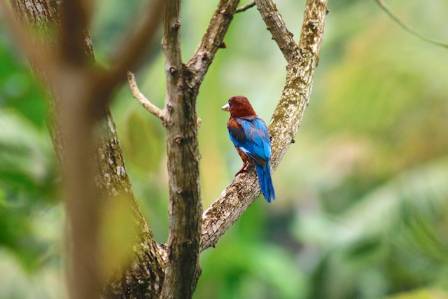
Scarlet Tanager: The Red Bird Hidden in the Forest
The Scarlet Tanager is a striking, medium-sized songbird that is roughly comparable in size to a Baltimore Oriole, with a body length of about 16–17 cm. During the breeding season, the male is especially eye-catching, featuring vivid red plumage and a red tail contrasted by deep black wings and a pale-colored bill.
CRAFT · en
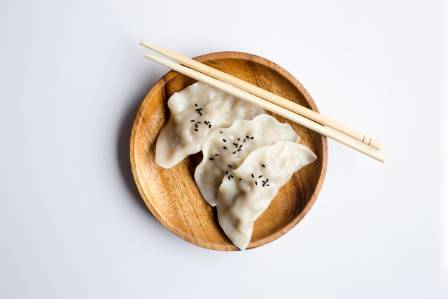
Master the Craft: Essential Strategies for Perfect Homemade Dumplings
In many cultures, the act of assembling dumplings is more than just meal preparation; it is a rhythmic meditation and a cherished family tradition passed down through generations. While the beautifully pleated creations seen on social media can feel intimidating, the reality is that dumplings are one of the most accessible foods to make at home. The secret lies not in instant perfection, but in the willingness to practice. Even if your first few attempts appear a bit irregular, they will still provide a delicious and satisfying reward.
CRAFT · en

Modern Performance Vehicles That Are Destined to Become Highly Valuable Future Classics
The market for collectible automobiles changes constantly. Elite manufacturers like Ferrari or Porsche create timeless machines with almost every new release. Other car companies struggle to achieve this status. They only produce a few legendary models throughout their history. This selection highlights modern vehicles. We believe they will become highly sought after in a few decades. Some models remain quite affordable today. Others require a massive financial investment. Every vehicle listed here should continue to gain value. Current market patterns strongly support this trajectory. These machines are also incredible to drive. They will make excellent additions to any private garage.
CRAFT · en
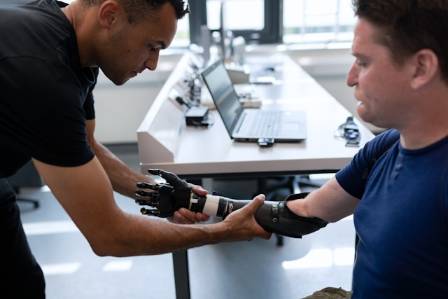
The Surprising History and Cutting Edge Future of Modern Prosthetics
A prosthesis is a specialized artificial device designed to replace a missing human body part. Individuals lose limbs or organs through severe physical trauma, progressive illness, or congenital conditions present from birth. These devices work to restore original physical functionality or provide aesthetic visual completeness. A person living with an amputation undergoes comprehensive physical rehabilitation coordinated by specialized medical teams. These care teams include rehabilitation physicians, prosthetists, physical therapists, occupational therapists, and nursing staff. Technicians construct modern devices using manual craftsmanship or computer design software. Design software enables precise two-dimensional and three-dimensional modeling alongside advanced structural analysis.
CRAFT · en

Strategic Selection of Professional Women’s Suiting
Navigating the world of formal business attire is essential for professional advancement. A well-chosen interview suit serves as a neutral backdrop, ensuring that your expertise and intellect remain the focal point of a conversation rather than your clothing. In conservative industries such as finance, law, or consulting, the primary objective is to present a polished image that signifies reliability and respect for the environment.
CRAFT · en

China's Top 10 Cities for Breathtaking Nightscapes
As darkness descends, cities across China illuminate in a dazzling display of lights, creating a golden tapestry that transforms the night into a vibrant spectacle. This glittering veil not only brightens the evening but also reveals each city's unique energy and prosperity. Here are our top recommendations for experiencing the most magnificent night views in China.