
Stall note
Nine things you didn’t know about marmots
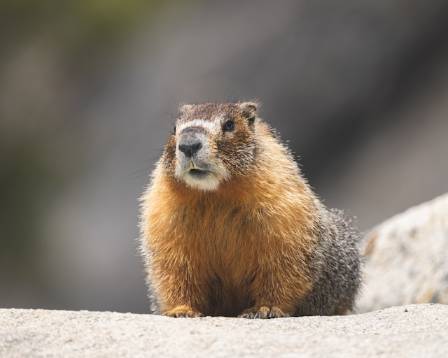
Marmots are large, ground-dwelling members of the squirrel family and are among the most recognizable animals found in the Alps and other mountain regions. With their round bodies, fluffy fur, and adorable appearance, they have become beloved symbols of alpine landscapes.
Michael Turner
Curator note
Stall tip
The full note continues below on the linen catalog desk.
Aisle
Stall Desk
Marmots are large, ground-dwelling members of the squirrel family and are among the most recognizable animals found in the Alps and other mountain regions. With their round bodies, fluffy fur, and adorable appearance, they have become beloved symbols of alpine landscapes.
Although many people recognize these charming mountain rodents, marmots have a surprisingly interesting history, social structure, and set of survival adaptations.
There Are Fourteen Living Species of Marmots
Today, there are fourteen known living species of marmots, along with four additional species that have been identified from fossil evidence.
The alpine marmot (Marmota marmota) is the only marmot species found in the European Alps. Other marmot species live in mountain regions of North America, including the hoary marmot (Marmota caligata) and the yellow-bellied marmot (Marmota flaviventris).
Not every marmot lives at high elevations. The groundhog (Marmota monax) is a marmot species that prefers lower-elevation habitats rather than mountainous environments.
Alpine Marmots Have Their Own Alarm Language
Marmots are famous for their loud, sharp whistles, which they use to warn others of danger.
Alpine marmots have different alarm calls depending on the type of threat they detect. A single high-pitched whistle usually signals danger from above, such as a hunting eagle. Multiple whistles often indicate a threat approaching from the ground.
Research on some North American marmot species has not shown the same clear connection between specific alarm sounds and different types of predators.
Marmots Live in Family Groups and Form Strong Bonds
Marmots are social animals that usually live in family units with a clear hierarchy. Each family is led by a dominant male and female, and normally only this breeding pair produces offspring each year.
The dominant female helps control reproduction within the group and prevents other members from mating.
Each family has its own underground burrow system. Over many generations, these tunnels can expand into large and complex networks. During winter, all members of the family gather together in the main sleeping chamber, known as the hibernaculum, where they spend the cold months.
Some Marmots Mate Outside the Family Pair
Although marmots are generally considered monogamous, genetic research has revealed that their social system is not always as strict as it appears.
Studies have found that between about 2.2% and 13% of young marmots may have a father other than the dominant male. In some cases, babies within the same litter can even have different fathers.
Marmot Families Live Together in Colonies
Multiple marmot families often form larger colonies. Within these colonies, each family maintains its own territory.
Neighboring groups usually avoid close interaction, and encounters between different families can sometimes become aggressive.
Marmots mark the boundaries of their territory using scent signals from their droppings. These scent markings help identify which areas belong to each family group.
Marmots Spend Most of Their Lives Sleeping
Marmots are famous for their long hibernation periods. They may spend around 200 days each year in a dormant state, losing approximately one-third of their body weight during this time.
Instead of eating throughout winter, they survive by using stored body fat. Their sleep is not completely continuous, however. They experience short periods of activity, which scientists believe may help maintain proper body temperature.
Young marmots face a major challenge during their first year. They must eat enough food during their early months to build sufficient energy reserves before their first winter hibernation.
Whistler Mountain Got Its Name From Marmots
In Canada, marmots are often called “whistlepigs” or “whistlers” because of their loud warning calls.
The famous Canadian ski destination Whistler received its name because of the many marmots living in the area and their distinctive whistles. The mountain was originally known as London Mountain, but as tourism developed, a more appealing name was chosen to attract visitors.
Marmots First Appeared in North America
Marmots have an ancient evolutionary history. After the continents of North America and Eurasia separated around 40 million years ago, rodent populations on the two continents developed independently.
The earliest marmots appeared in North America approximately 15 million years ago. Later, around one million years ago, some marmot populations crossed the Bering Strait into Eurasia, eventually giving rise to the marmot species found there today.
Marmots May Have Helped Humans Find Gold
Marmots have even played a role in ancient stories about gold discovery.
Around 2,500 years ago, the Greek historian Herodotus described large “golden ants” that were said to be larger than foxes and connected with gold collection in the ancient Persian Empire.
For centuries, this story was considered fictional. However, research in the 1990s suggested that Herodotus may actually have been describing golden marmots living in what is now Pakistan.
The ancient Persian word for marmot translated roughly as “mountain ant.” These marmots dug burrows in sandy soils containing gold particles, and small amounts of gold-bearing material became attached to their fur. Historians now believe local people may have collected gold from the sand brought to the surface by these burrowing animals.

More from this aisle
CRAFT · en

The Surprising Story of Prussian Blue and Why It Disappeared From Modern Acrylic Paint
Prussian Blue, known scientifically as pigment PB27, is a deep and intense shade that left a massive mark on art history. This particular color defined the melancholy mood of Picasso during his famous Blue Period and served as a staple for painters throughout the Baroque and Rococo eras. It is also the very pigment generated during the cyanotype printing process, which gave rise to the everyday term blueprint. Despite its widespread historical importance across multiple artistic mediums, modern artists who prefer working with acrylics will find it incredibly difficult to locate a tube of genuine Prussian Blue on store shelves today.
CRAFT · en

Glacial Landforms and Rock Types
The retreat of ancient glaciers shaped the landscape of the Puget Lowland, leaving behind a wide variety of glacial landforms and deposits. These features provide important evidence of the region’s icy past and reveal how massive sheets of ice transformed the terrain over thousands of years.
CRAFT · en

How Modern Fiber Optic Cables Work and Deliver Data
Advanced glass engineering allows digital signals to travel across the globe instantly. Modern manufacturing turns raw silica into microscopic glass threads with incredible precision. Specialized assemblies bring custom optical systems to high-tech medical and industrial fields.
CRAFT · en

Exploring the World of Free Climbing: A Comprehensive Guide
Free climbing, an exhilarating discipline within the world of rock climbing, invites enthusiasts to ascend natural rock formations using minimal equipment, relying on skill and strength rather than artificial aids for upward progress. This guide provides an in-depth exploration of free climbing, its subtypes, and essential safety considerations.
CRAFT · en

Maho Beach: A Comprehensive Guide to the Ultimate Plane-Watching Paradise
Nestled in the Dutch Caribbean, Maho Beach stands as an awe-inspiring destination, catering to aviation enthusiasts seeking an extraordinary experience. This beach, renowned for its captivating low-flying airliners, resides just beyond the Princess Juliana International Airport's runway, offering an unparalleled vantage point for witnessing planes take off and touch down. To ensure visitors don't miss a moment of the spectacle, daily airline timetables adorn most bars and restaurants along the beach.
CRAFT · en

Essential Insights into the World of Marine Turtles
Sea turtles are ancient voyagers that have inhabited our oceans for over 100 million years, having shared the planet with dinosaurs. Today, the scientific community identifies seven distinct species: the Hawksbill, Loggerhead, Leatherback, Olive Ridley, Green, Flatback, and Kemp’s Ridley. Alarmingly, six of these are currently categorized as threatened with extinction. There is such a lack of data regarding the Flatback turtle that its specific risk level remains undetermined.