Stall note
Which Planet Has the Most Moons?
Our Solar System consists of eight planets, including Earth, each with a unique set of moons. Some planets boast numerous moons, while others have just a few—or none at all. But which planet holds the record for the most moons? Are moons common throughout our Solar System?
Eleanor Grace Sullivan
Curator note
Stall tip
The full note continues below on the linen catalog desk.
Aisle
Stall Desk
Our Solar System consists of eight planets, including Earth, each with a unique set of moons. Some planets boast numerous moons, while others have just a few—or none at all. But which planet holds the record for the most moons? Are moons common throughout our Solar System?
And, interestingly, could a moon have its own moon?
As with many questions related to planets, the answer depends on whether we’re discussing our Solar System specifically or considering planets throughout the universe. It also hinges on how we define what a moon actually is.
Defining a Moon: Traditional vs. Small Body Moons
NASA classifies moons into two categories:
-
Traditional Moons: These are the moons most people are familiar with—large objects that orbit their parent planets at relatively close distances, similar to our own Moon.
-
Small Body Moons: These include smaller celestial bodies like asteroids and Kuiper Belt Objects. While they can orbit planets instead of the Sun, they are much smaller in size and tend to orbit at much greater distances.
Moons Across the Solar System
When it comes to traditional moons, not every planet in our Solar System is equally blessed. Venus and Mercury, for example, have no moons at all. Earth has one, while Mars has two small moons: Phobos and Deimos.
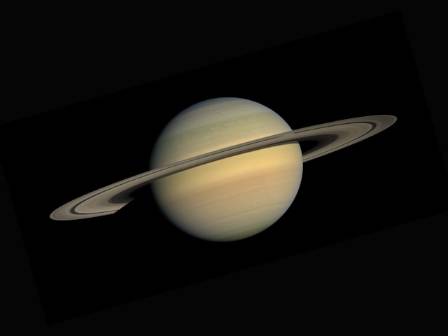
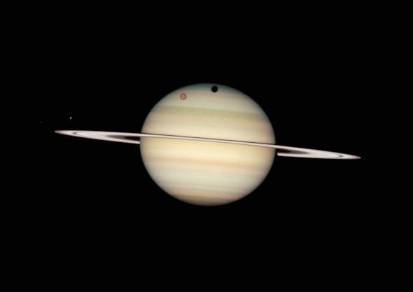
However, the real moon collectors are the gas giants. Jupiter has an impressive 95 moons, but Saturn outshines it with a whopping 146 confirmed moons, making Saturn the true king of moons in our Solar System.
As we move further out, Uranus hosts 27 moons, Neptune has 14, and even the dwarf planet Pluto can claim 5 moons. Altogether, the Solar System contains 290 traditional moons.
But if we include small body moons, NASA reports a total of 752 moons in our Solar System.
Exoplanets and Their Potential Moons
When we shift our gaze beyond our Solar System, things get a bit murkier. Exoplanets—planets orbiting stars outside our Solar System—are so distant that detecting them, let alone any moons they might have, is incredibly challenging. So far, astronomers haven't definitively identified any exomoons.
Still, observations of certain "hot Jupiter" exoplanets—such as Kepler-1625b, Kepler-1708b, and Kepler-1513b—hint that they could have moons. Although we don’t have direct evidence yet, there's no scientific reason to believe that exoplanets wouldn't have moons. In fact, given that some exoplanets are far larger than Jupiter or Saturn, it's reasonable to assume they could have an even greater number of natural satellites.
More from this aisle
CRAFT · en
Identifying Lunar Irregularities: The Role of Artificial Intelligence in Modern Moon Research
Artificial intelligence is fundamentally changing the methodology of lunar exploration. By leveraging advanced computational models, researchers are now able to identify unusual surface features on the Moon with unprecedented speed and accuracy. This shift toward automation is essential for modern planetary science, as it allows experts to process vast amounts of data that would be impossible for human teams to review manually. The transition to AI-driven analysis marks a significant milestone in our quest to understand the geological and potentially technological history of our closest celestial neighbor.
CRAFT · en
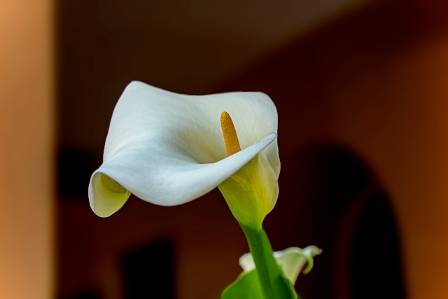
Let’s Look at the Calla Lily In-Depth
If you are anything like me, watching tiny green shoots emerge from the soil and feeling the warmth of the sunshine can bring a sense of happiness and hope. During uncertain times, nature has a wonderful way of lifting our spirits. For those of us living in the Northern Hemisphere, the arrival of spring brings the pleasure of seeing flowers bloom, trees grow new leaves, and birds return.
CRAFT · en
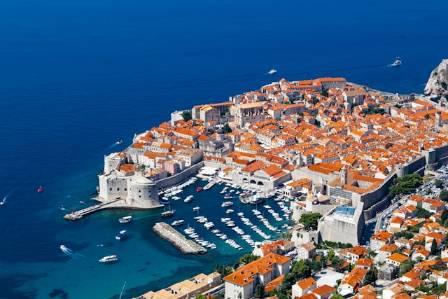
Tips For Visiting Dubrovnik
Dubrovnik quickly became our favorite destination in Croatia and easily ranked among the top three places we visited during our latest European journey. Interestingly, when we first planned our Croatia itinerary, we didn’t expect to dedicate much time to this city. We originally scheduled only three nights and three full days, but after arriving, we immediately wished we had planned a longer stay.
CRAFT · en
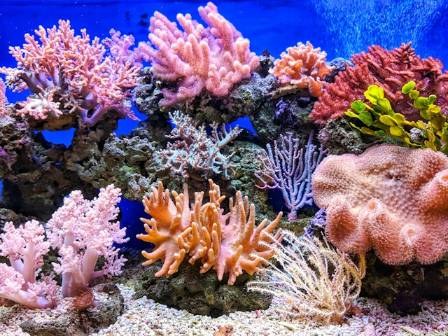
Seven Surprising Facts about Coral
When you picture the ocean, you may immediately think of vibrant coral reefs filled with remarkable colors, unusual shapes, and countless marine creatures. Although coral reefs are beautiful to look at, there is far more happening beneath the surface than their appearance suggests. Understanding what makes corals unique also helps us recognize why they are so important to protect, both for the health of our oceans and for the planet as a whole.
CRAFT · en
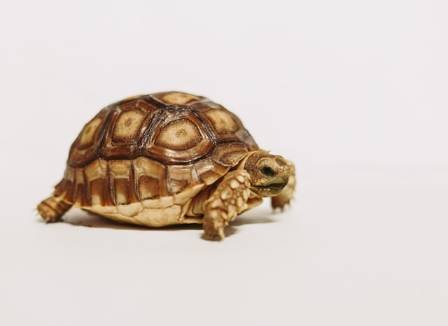
Essential Insights into the World of Marine Turtles
Sea turtles are ancient voyagers that have inhabited our oceans for over 100 million years, having shared the planet with dinosaurs. Today, the scientific community identifies seven distinct species: the Hawksbill, Loggerhead, Leatherback, Olive Ridley, Green, Flatback, and Kemp’s Ridley. Alarmingly, six of these are currently categorized as threatened with extinction. There is such a lack of data regarding the Flatback turtle that its specific risk level remains undetermined.
CRAFT · en

Chicago History
"It is hopeless for the occasional visitor to try to keep up with Chicago. She outgrows his prophecies faster than he can make them." – Mark Twain, 1883 When Mark Twain penned those words, Chicago was only 46 years into cityhood, yet it had already expanded more than a hundredfold — from a tiny trading outpost at the mouth of the Chicago River into one of the country’s largest cities. And its growth was far from over. Within two decades, the city would quadruple its population, astonishing the world with its capacity to reinvent itself again and again.