Stall note
A Tiny Bird With a Remarkable Predator Warning System
Humans have a complicated attitude toward listening in on other people. While curiosity often makes us interested in information that has nothing to do with us, intentionally overhearing someone's private conversation is generally regarded as improper. In the natural world, however, listening to the communications of other animals can sometimes be essential for staying alive.
Nerys Dalton
Curator note
Stall tip
The full note continues below on the linen catalog desk.
Aisle
Stall Desk
Humans have a complicated attitude toward listening in on other people. While curiosity often makes us interested in information that has nothing to do with us, intentionally overhearing someone's private conversation is generally regarded as improper. In the natural world, however, listening to the communications of other animals can sometimes be essential for staying alive.
Animals do not always rely only on communication within their own species. Many creatures gain valuable information by watching or listening to signals produced by other animals, particularly when those signals warn of a predator nearby.
For smaller animals, this shared information can be especially important. Different species often face the same predators, so recognizing another animal's warning calls can provide a major advantage. Even species that are not closely related may be able to understand and react to one another's alarm signals. Vervet monkeys, for instance, respond to warning calls produced by superb starlings, while mongooses have been observed reacting to danger signals from hornbills.
A Complex Language of Danger
Animal alarm calls are much more sophisticated than a simple message indicating that a predator is present. Many species have evolved distinct signals that can communicate information about different predators or varying degrees of danger.
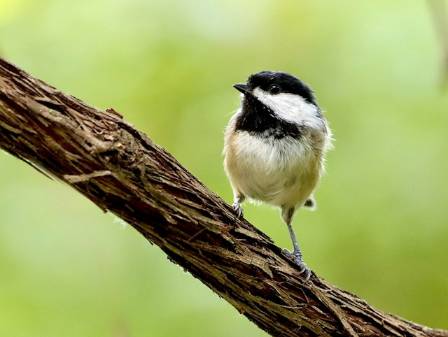
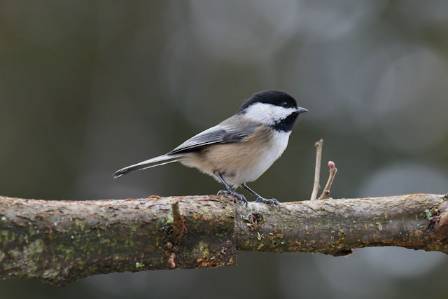
One of the most advanced alarm communication systems known to scientists is found in a small songbird native to North America: the black-capped chickadee.
Despite its tiny size and seemingly ordinary appearance, the chickadee produces warning calls that provide valuable information to numerous other animals living in the same environment.
The bird gets its familiar name from its characteristic “chick-a-dee-dee-dee” call. It uses this vocalization when it notices a potential threat, including a bird of prey perched nearby or a predator traveling along the ground.
Once the warning moves through the surrounding forest, many other bird species may gather in response. Researchers have observed between 24 and 50 different species assembling around a predator, a behavior called mobbing. By gathering around the threat, pursuing it, and repeatedly harassing it, the birds can make hunting more difficult and eventually encourage the predator to leave the area.
More Than a Simple Warning Call
The chickadee's alarm system communicates much more than the general presence of a predator. The bird can alter the structure of its warning call to convey more specific information about the nature of the threat.
Changes in the arrangement and timing of sounds within the call can provide information about:
The kind of predator that is nearby.
How serious the danger is.
The predator's approximate size and hunting capabilities.
This information can be particularly useful because smaller birds of prey may sometimes pose a greater threat than larger predators. Small raptors are often highly agile and can move rapidly through dense forest environments, making them particularly effective at catching small birds.
When a particularly dangerous predator approaches, chickadees change their alarm calls by reducing the amount of time between the “chick” and “dee” portions and increasing the number of “dee” notes added at the end.

Other Birds Understand Chickadee Messages
Researchers Christopher Templeton and Erick Greene of the University of Washington examined whether other bird species were capable of interpreting these differences in chickadee alarm calls.
Their research focused on red-breasted nuthatches, which commonly associate with black-capped chickadees in mixed-species flocks.
As part of the experiment, the researchers presented chickadees with two different owl species under controlled conditions. One was a larger owl, while the other was a smaller owl that posed a greater threat to small birds.
The scientists recorded the warning calls produced by the chickadees during each encounter. They then used concealed speakers positioned inside trees to play those recordings back to red-breasted nuthatches.
The nuthatches reacted to both categories of alarm calls by moving toward the source and investigating the possible threat.
Their responses, however, became noticeably stronger when they heard the call associated with the smaller and more dangerous predator.
Compared with their reaction to the warning linked to the larger owl, the nuthatches:
Approached and gathered around the playback source more often.
Stayed near the source for a longer period.
Moved to more than twice the distance closer to the speaker.
Displayed increased wing-flicking, which indicates heightened alarm and excitement.
Produced a greater number of alarm calls themselves.
These responses demonstrated that the nuthatches were doing more than simply reacting to a generic warning. They were able to extract specific information from the chickadee's alarm call and adjust their behavior according to the level of danger it represented.
More from this aisle
CRAFT · en

Curb Sales of SUVs: Mitigating Health and Environmental Harms
Once a specialized option for offroad driving, Sports Utility Vehicles (SUVs) have evolved into a dominant force in the global automotive market. Their rise has been nothing short of remarkable: globally, SUVs now account for half of all new car sales, a stark jump from just 15% in 2010. The UK market reflects this trend even more acutely, with SUVs making up 63% of new car sales in 2024 compared to a mere 12% over a decade earlier. This proliferation is not an isolated phenomenon but part of a broader "carspreading" trend, where vehicles have steadily grown larger in dimensions—taller, wider, and heavier—over time. As Dr. Anthony Laverty and his colleagues highlight in The BMJ’s climate issue, this expansion brings with it significant, yet often overlooked, risks to public health and the environment, demanding urgent action at local, national, and international levels.
CRAFT · en
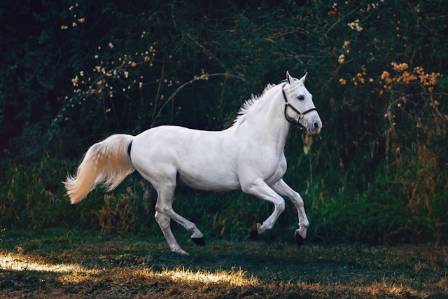
Fascinating Insights Into the World of Horses
Individuals who spend time at animal sanctuaries often discover that horses possess intricate personalities and unique behaviors. While many people admire these animals from a distance, the depth of their individuality is truly remarkable. Horses are sentient beings with a variety of surprising traits that demonstrate their intelligence and emotional complexity.
CRAFT · en

Decoding the Chromatic Science of Fashion Apparel
Color, an undeniable cornerstone, sets the tone for the visual impact of any garment in the realm of fashion. Functioning as a manifestation of light in vibrational waveforms surpassing 186,000 miles per second, color transcends the physical realm to influence individuals psychologically, physically, and emotionally, inciting actions, motivation, and tranquility.
CRAFT · en

Blue Beauties: Meet The Eastern Bluebird
Bluebirds are among those birds that seem to inspire affection almost everywhere. They have appeared in songs such as “Bluebird” by Paul McCartney & Wings, in well-known poems like Emily Dickinson’s “The Bluebird,” and in expressions that have become part of our culture, including “The Bluebird of Happiness,” a phrase associated with Edward Heyman’s 1934 song.
CRAFT · en
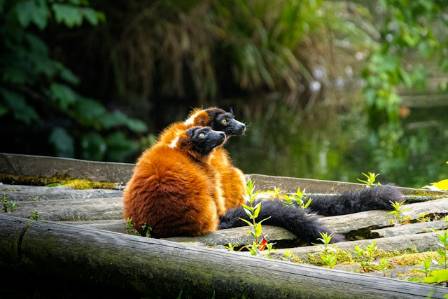
Ring-tailed Lemurs: Madagascar’s Unique Island Primates
Lemurs are a special group of primates that exist naturally only on the African island of Madagascar and a few nearby small islands.
CRAFT · en

The Spectacular Rise and Unstoppable Evolution of the Famous Bavarian Automaker
The official origin of this prominent German vehicle producer traces back to March 1916. An aviation manufacturing company named Bayerische Flugzeugwerke was established. This business changed its name to Bayerische Motoren Werke in 1922. The famous acronym actually originates from 1917 when Rapp Motorenwerke adjusted its title. The first creation was a straight six aircraft engine known as the IIIa. This power plant was famous for excellent high altitude performance. The resulting military orders triggered rapid corporate growth. After the first global conflict ended the company managed to survive. Workers produced motorcycle engines and agricultural gear. They also manufactured household goods and railway braking mechanisms.