Stall note
Guide To The World’s Biggest Waves
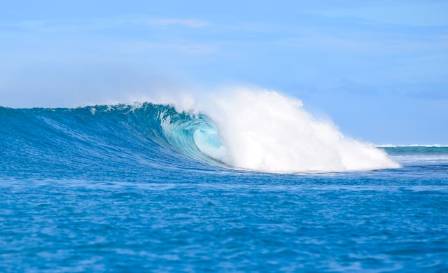
Riding giant waves demands a rare blend of courage, skill, and determination. Whether paddling into towering walls of water or releasing the tow rope on waves approaching 100 feet, big-wave surfers share a mindset that refuses to back down when conditions become extreme.
Adrian Vale
Curator note
Stall tip
The full note continues below on the linen catalog desk.
Aisle
Stall Desk
Riding giant waves demands a rare blend of courage, skill, and determination. Whether paddling into towering walls of water or releasing the tow rope on waves approaching 100 feet, big-wave surfers share a mindset that refuses to back down when conditions become extreme.
In 2024, German surfer Sebastian Steudtner raised the bar once again by breaking his own world record at Portugal’s Nazaré, successfully riding a colossal wave measured at 93.73 feet. While Nazaré now dominates conversations about giant surf, the pursuit of massive waves began long before its rise to fame. Legendary breaks such as Mavericks and Jaws were once considered the ultimate proving grounds for big-wave specialists, before surfers started uncovering remote and powerful waves in every corner of the globe.
Today, numerous locations continue to challenge the limits of what is possible in surfing. Some are world-famous, while others remain hidden gems accessible only through difficult journeys and specialized support. Though these waves are best left to highly trained professionals, they remain spectacular sights for anyone fascinated by the ocean’s raw power.
Mavericks – Half Moon Bay, California
Just off Pillar Point near Half Moon Bay, Mavericks has earned its reputation as one of the world's premier big-wave breaks. The spot received its name from a German Shepherd belonging to surfer Alex Matienzo. The dog, named Maverick, often accompanied surfers by swimming alongside them as they paddled out.
Mavericks was largely unknown until local surfer Jeff Clark began surfing it alone in the mid-1970s, continuing for years before others joined him. The wave forms when large west-to-northwest swells interact with a deep underwater canyon that directs energy toward a shallow reef. This process creates enormous, powerful waves with thick lips and challenging sections.
Notable surfers associated with Mavericks include Mark Foo, Peter Mel, Jay Moriarity, Grant Washburn, Darryl Virostko, Mark Renneker, Ken Collins, and Bianca Valenti.
Jaws – Maui, Hawaii
Known locally as Peʻahi, Jaws is one of the most famous giant waves on Earth. For many years, surfers believed it held the potential to produce the largest rideable waves anywhere in the world.
Jaws demands an exceptional understanding of ocean conditions, equipment, safety procedures, and local geography. Massive north-northwest swells, often exceeding 20 to 30 feet with long wave periods, are required to activate the break. The best conditions typically occur between November and March.
In December 2024, Benjamin "Sancho" Sanchis rode what many consider one of the largest waves ever surfed at Jaws—a massive 64-foot wall of water that ultimately sent him to the hospital afterward.
Notable surfers include Billy Kemper, Kai Lenny, Aaron Gold, Keala Kennelly, Paige Alms, Yuri Soledade, Nathan Florence, and John John Florence.
Nazaré – Portugal
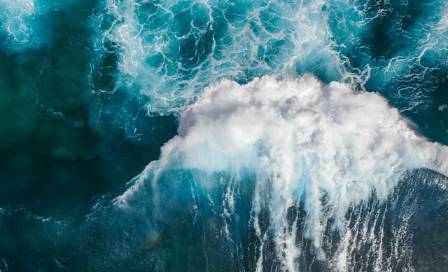
Nazaré has become synonymous with record-breaking surf. Although initially criticized by some surfers as an unsuitable wave, perceptions quickly changed once the break revealed its incredible potential.
The location gained international attention in 2010 after local surfer Dino Casimiro introduced Garrett McNamara to the wave. The following year, McNamara set a world record there, placing Nazaré firmly on the global surfing map.
The wave's immense size results from the Nazaré Canyon, a deep underwater trench that focuses and amplifies incoming North Atlantic swells. As waves interact with the canyon and surrounding seabed, they combine into towering peaks visible from the nearby cliffs.
Despite the popularity of HBO's "100 Foot Wave," no surfer has yet officially ridden a wave measuring 100 feet at Nazaré.
Notable surfers include Garrett McNamara, Sebastian Steudtner, Andrew Cotton, Maya Gabeira, Rodrigo Koxa, Lucas Chumbo, Nic Von Rupp, and Justine Dupont.
Killers – Todos Santos, Mexico
Located near Isla Todos Santos off Baja California, Killers is a powerful offshore break known for producing enormous open-ocean waves. The wave forms above an underwater canyon that organizes incoming swell into massive peaks.
Marty Hoffman surfed the wave during the 1980s, but it gained broader recognition when Tom Curren and Dave Parmenter visited later in the decade. Taylor Knox's ride on a 52-foot wave and Brad Gerlach's famous 68-foot wave in 2005 further cemented Killers' reputation.
Access requires a boat ride from Ensenada Harbor, and the wave is highly dependent on strong swells originating in the Gulf of Alaska.
Notable surfers include Tom Curren, Dave Parmenter, Greg Long, Nic Lamb, Carlos Burle, Brad Gerlach, and Taylor Knox.
Cortes Bank – California
Roughly 175 kilometers west of San Diego lies Cortes Bank, one of the most remote surf breaks on the planet. The wave forms over a submerged mountain whose highest point nearly reaches the ocean's surface.
As swells travel across the Pacific, they encounter this underwater feature and transform into giant breaking waves far offshore. Due to its isolation, surfers must be fully prepared for emergencies when making the journey.
The first recorded ride occurred in 1962 when ship captain Harrison Ealey surfed the wave. Wider recognition came in the early 2000s after surfers including Mike Parsons and Peter Mel tackled its giant peaks. Parsons' famous 65-foot ride won a major big-wave award and brought international attention to the break.
Notable surfers include Mike Parsons, Brad Gerlach, Ken Collins, Peter Mel, Shane Dorian, Rusty Long, and Katie McConnell.
Mullaghmore – County Sligo, Ireland
Mullaghmore is Europe's most celebrated cold-water big-wave slab. Situated on Ireland's rugged Atlantic coast, it receives powerful North Atlantic swells that create heavy and intimidating waves.
The break gained worldwide recognition following the release of the 2009 surf film Powers of Three, which showcased Ireland's exceptional surf conditions.
Today, many European big-wave surfers regularly travel between Portugal and Ireland chasing storms. In 2020, local surfer Conor Maguire rode one of the largest waves ever seen at Mullaghmore.
The wave performs best during major west or southwest swells.
Notable surfers include Conor Maguire, Tom Lowe, Andrew Cotton, Mickey Smith, Fergal Smith, Noah Lane, and Peter Conroy.
Waimea Bay – Oahu, Hawaii
Waimea Bay is widely considered the birthplace of modern big-wave surfing. Long before tow surfing and personal watercraft support became common, pioneers challenged themselves on Waimea's massive winter surf.
The break hosts the prestigious Eddie Aikau Invitational, a contest held only when conditions reach extraordinary size.
Powerful north and northwest swells enter the bay and break over a combination of sand and lava reef, creating waves that can reach 40 feet on the Hawaiian scale.
Surfing legends such as Greg Noll helped establish Waimea's legendary status during the 1950s and 1960s.
Notable surfers include Greg Noll, Brock Little, Billy Kemper, George Downing, Peter Cole, Buzzy Trent, Kelly Slater, and Luke Shepardson.
Teahupo'o – Tahiti
Teahupo'o is famous for producing some of the heaviest and most visually dramatic waves on Earth. Located on the southwest coast of Tahiti, the wave breaks over an extremely shallow coral reef.
South Pacific swells move from deep water to shallow reef in a remarkably short distance, creating thick, powerful barrels unlike almost anywhere else.
Local surfers had been riding Teahupo'o for decades before it became internationally known during the 1980s and 1990s. The wave's reputation exploded after iconic sessions featuring surfers such as Laird Hamilton and Keala Kennelly.
Notable surfers include Laird Hamilton, Keala Kennelly, Michel Bourez, Matahi Drollet, Vahine Fierro, Kauli Vaast, and Raimana Van Bastolaer.
Shipstern Bluff – Tasmania
Shipstern Bluff is among the most unpredictable and dangerous waves in the world. Located on Tasmania's remote southeast coast, it is famous for its enormous wave "steps" that create multiple ledges within a single face.
The wave breaks over a submerged rock shelf during large southwest swells, causing dramatic and often chaotic formations.
First surfed by local David Guiney, Shipstern Bluff became internationally famous after striking photographs surfaced in the early 2000s.
Notable surfers include David Guiney, Mark Mathews, Koby Abberton, Dylan Longbottom, Russell Bierke, Andy Irons, and Jamie Mitchell.
Punta Galea – Basque Country, Spain
Situated near Bilbao at the mouth of the Nervión River, Punta Galea is one of Europe's leading big-wave locations. The annual Punta Galea Challenge attracts elite surfers from around the world whenever giant conditions arrive.
The wave develops when Atlantic swells entering the Bay of Biscay interact with local bathymetry and river currents, creating steep and powerful faces.
Basque surfer Natxo Gonzalez played a major role in elevating Punta Galea's international profile through standout performances in competition.
Notable surfers include Natxo Gonzalez, Grant "Twiggy" Baker, Aritz Aranburu, Nic Lamb, and Justine Dupont.
Punta de Lobos – Chile
Punta de Lobos, meaning "Wolf Point," is one of South America's most iconic surf locations. The powerful left-hand point break faces directly into Southern Ocean swells and can produce waves exceeding 50 feet.
The wave combines reef and sand-bottom sections, creating long rides that can stretch for nearly a kilometer under ideal conditions.
Efforts led by surfer Ramon Navarro successfully protected the area from major coastal development, and in 2017 Punta de Lobos was officially designated a World Surfing Reserve.
Notable surfers include Ramon Navarro, Rafael Tapia, Cristian Merello, and Leilani McGonagle.
Dungeons – Cape Town, South Africa
Among South Africa's many powerful surf breaks, Dungeons stands out as one of the most intimidating. Located near Cape Town, the wave is known for its size, complexity, and brutal hold-downs.
The break was first surfed by Pierre de Villiers and Peter Button in 1984. Its name comes from the sensation of being trapped underwater during multiple-wave hold-downs.
Dungeons hosted the famous Red Bull Big Wave Africa event in the early 2000s, although competitions were occasionally affected by sightings of great white sharks.
Strong paddling ability, experience, and mental resilience are essential at Dungeons, where steep cliffs and massive surf create one of the world's most challenging big-wave environments.
Notable surfers include Pierre de Villiers, Peter Button, Grant Baker, Frank Solomon, Mike Schlebach, Chris Bertish, and Jurie van Dyk.
The Endless Search for Giant Waves
From the freezing waters of Ireland and Alaska to the tropical reefs of Tahiti and Hawaii, big-wave surfing continues to push the limits of human performance. Every season brings new discoveries, bigger swells, and fresh opportunities for surfers willing to challenge the ocean at its most powerful. While only a select few possess the skills to ride these monsters, the spectacle of giant waves remains one of nature's most awe-inspiring displays.
More from this aisle
CRAFT · en

Raccoons — Facts and Fancies
The raccoon (Procyon lotor) is a member of the carnivore order, a group of mammals that mainly consume meat but may also eat plant materials such as berries, fruits, vegetables, eggs, acorns, beech nuts, hickory nuts, grains, grasses, and tree bark when other food sources are limited. Like other carnivores, raccoons have five toes on each foot and large canine teeth. However, raccoons are omnivorous animals, and the balance between plant and animal foods in their diet changes depending on the season and available resources.
CRAFT · en
The Surprising History and Cutting Edge Future of Modern Prosthetics
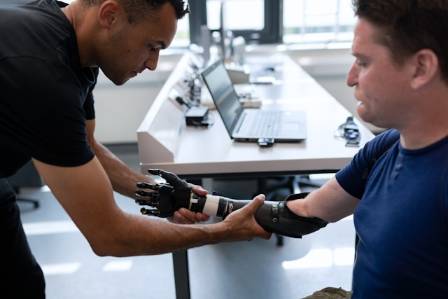
A prosthesis is a specialized artificial device designed to replace a missing human body part. Individuals lose limbs or organs through severe physical trauma, progressive illness, or congenital conditions present from birth. These devices work to restore original physical functionality or provide aesthetic visual completeness. A person living with an amputation undergoes comprehensive physical rehabilitation coordinated by specialized medical teams. These care teams include rehabilitation physicians, prosthetists, physical therapists, occupational therapists, and nursing staff. Technicians construct modern devices using manual craftsmanship or computer design software. Design software enables precise two-dimensional and three-dimensional modeling alongside advanced structural analysis.
CRAFT · en

The Finest Coupes of 2025: Style Meets Performance
The coupe remains the ultimate expression of automotive style, blending sleek aesthetics with engaging driving dynamics. For 2025, these two-door masterpieces range from accessible sports cars to ultra-exotic supercars, each offering its own unique take on the classic coupe formula.
CRAFT · en

Dandelion Health Benefits: Nutrition, Antioxidants, and Anti-Inflammatory Properties
Dandelion leaves, roots, and flowers provide numerous health benefits, such as supporting liver function and reducing inflammation. Though often regarded as a persistent lawn weed, dandelion has been used in traditional medicine for centuries.
CRAFT · en
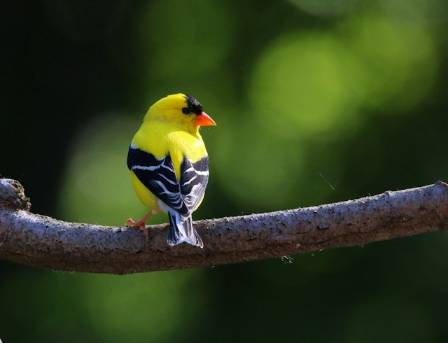
The Late Blooming Summer Breeder: The American Goldfinch
While many bird species are already raising their young or preparing to see their nestlings leave, the American Goldfinch, also known as the Eastern Goldfinch, is only beginning its breeding season. This species is among the latest songbirds to reproduce each summer.
CRAFT · en
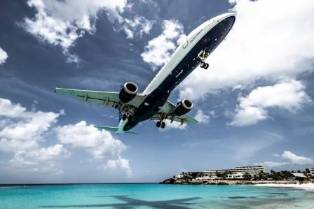
Maho Beach: A Comprehensive Guide to the Ultimate Plane-Watching Paradise
Nestled in the Dutch Caribbean, Maho Beach stands as an awe-inspiring destination, catering to aviation enthusiasts seeking an extraordinary experience. This beach, renowned for its captivating low-flying airliners, resides just beyond the Princess Juliana International Airport's runway, offering an unparalleled vantage point for witnessing planes take off and touch down. To ensure visitors don't miss a moment of the spectacle, daily airline timetables adorn most bars and restaurants along the beach.