
Stall note
Fun Pandas Facts You Didn't Know
When people picture giant pandas, they usually imagine adorable black-and-white bears that have captured the hearts of people around the world. But how much do we really know about these famous animals? From their unusual sixth digit to their bamboo-heavy diet and solitary lifestyle, pandas have many fascinating traits. Here are 15 facts that reveal more about these remarkable bears.
Daphne Ellis
Curator note
Stall tip
The full note continues below on the linen catalog desk.
Aisle
Stall Desk
When people picture giant pandas, they usually imagine adorable black-and-white bears that have captured the hearts of people around the world. But how much do we really know about these famous animals? From their unusual sixth digit to their bamboo-heavy diet and solitary lifestyle, pandas have many fascinating traits. Here are 15 facts that reveal more about these remarkable bears.
1. One Panda Year Equals About Three Human Years
In terms of life expectancy, one year of a giant panda's life is roughly comparable to three human years.
Giant pandas generally live for around 18 to 20 years in the wild, while those kept in captivity can reach approximately 25 to 30 years.
The oldest giant panda ever recorded was Xinxing, whose name means "New Star." She lived at Chongqing Zoo from 1982 to 2020 and reached an impressive age of 38 years and four months. That would be roughly equivalent to 115 human years.
2. Pandas Have Six "Fingers"
Giant pandas appear to have six digits on their paws, with the sixth functioning much like a human thumb. However, this extra "finger" is not a true movable digit. Instead, it is an unusual wrist bone or enlarged, opposable structure supported by strong muscles but lacking movable joints.
This special adaptation gives pandas a powerful grip, allowing them to hold bamboo securely while feeding. They can even squeeze bamboo into compact, cigar-like shapes with this sixth digit, making it easier to handle and eat.
3. Panda Mothers May Abandon One Cub When Twins Are Born
Female giant pandas generally have enough energy and milk to raise only one cub successfully. As a result, when twins are born in the wild, the mother usually concentrates her care on the stronger offspring.
The weaker cub is often left without sufficient care and normally does not survive. In panda breeding centers and zoos, however, keepers can intervene and help care for both cubs. This allows the mother to alternate between the babies while ensuring that each receives adequate attention and nourishment.
Eventually, when the mother enters her next breeding period, she will drive the young panda away so it can become independent. This generally occurs when the cub is about one to two years old.
4. Giant Pandas Have Poor Eyesight
It may come as a surprise, but giant pandas are highly nearsighted. They are reported to have eyesight equivalent to around 800 degrees of myopia and can see objects clearly only at distances of roughly five meters.
Because bamboo does not move like prey, pandas have comparatively little need for sharp long-distance vision. Instead, they depend heavily on their strong senses of smell and hearing. Scent marking and auditory information help them understand and navigate their surroundings.
So when a panda appears to stare directly at you, it may not actually be seeing you very clearly. It could instead be relying on its hearing or sense of smell to determine what is nearby.
5. Eating and Sleeping Take Up Most of a Panda's Day
For giant pandas, eating is a major daily activity. An adult weighing around 45 kilograms, or 100 pounds, may spend as much as 12 hours each day feeding and consume approximately 12 to 38 kilograms, or 26 to 84 pounds, of bamboo.
Pandas living in captivity can reach weights of up to 150 kilograms, or about 330 pounds, and may consume even more food.
When they are not searching for or eating bamboo, pandas spend much of their remaining time resting. In the wild, they commonly sleep for around two to four hours between feeding sessions.
6. Pandas Are Solitary Animals
Giant pandas generally live alone. In their natural habitat, individual pandas occupy their own territories and typically avoid allowing other pandas to enter them.
Their solitary lifestyle is closely connected to their diet. Because bamboo provides limited nutrition, pandas need to spend large amounts of time eating. Living in groups would create unnecessary competition for food and could lead to conflicts between individuals.
A giant panda generally requires a bamboo-covered territory of approximately 3 to 8 square kilometers, or about 1 to 3 square miles, to survive.
Pandas may sometimes be seen sharing spaces at zoos or breeding facilities, particularly when they are still young and have not established independent territories. As they mature and develop territorial behavior, they are generally housed separately.
7. A Panda Can Defecate Around 40 Times a Day
Bamboo accounts for approximately 99 percent of a giant panda's diet, yet the panda's digestive system still retains characteristics associated with carnivorous mammals.
Because pandas can digest only about 17 percent of the bamboo they consume, they need to eat enormous quantities to obtain enough energy. This also means they produce large amounts of feces, sometimes defecating around 40 times in a single day.
Most of their droppings consist of partially digested bamboo. Because so little of the plant is broken down, panda feces generally has a relatively mild smell and can even retain a subtle bamboo-like scent.
Historically, people living near pandas have even used the undigested pieces of bamboo found in panda droppings to make items such as picture frames and bookmarks.
8. Pandas Once Ate Meat
Although modern giant pandas are strongly associated with bamboo, their ancestors were not always dependent on a vegetarian diet. As environmental conditions and climate changes affected the availability of prey in their habitats, pandas increasingly relied on extensive bamboo forests as a food source.
Over time, they adapted to a bamboo-based diet, although they still retain an omnivorous nature.
Today, bamboo remains their primary food, but giant pandas can also consume other foods, including fruits such as apples and vegetables such as carrots. They are also capable of eating meat when it is available.
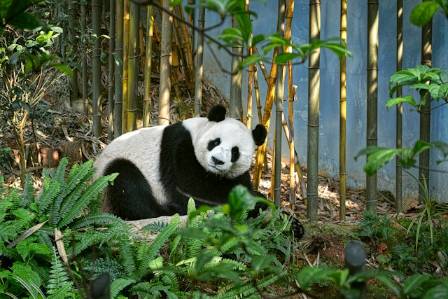
9. Their Black-and-White Fur Provides Camouflage
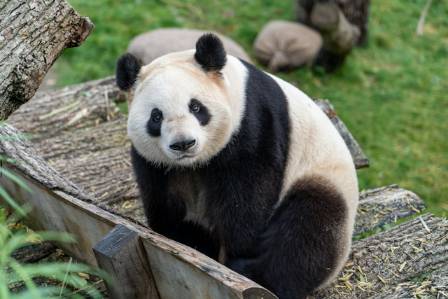
The unusual black-and-white appearance of giant pandas is not simply a charming feature. Their coloration can also help them blend into the environments where they live.
Pandas inhabit bamboo forests as well as mountainous areas where snow can cover the landscape. Their white fur can help them disappear against snowy backgrounds, while the darker portions of their bodies can blend into shaded woodland areas.
Their black patches may make them resemble dark shapes or rocks when viewed among forest shadows. Even the dark markings around their eyes may have a practical function, helping reduce glare in bright snowy conditions in a way somewhat comparable to wearing sunglasses.
10. Spring Is the Main Mating Season
Female giant pandas experience a very short fertile period, generally coming into heat only once a year for approximately two to three days. This period usually occurs between March and May, and pregnancy lasts for roughly five months.
During the breeding period, females in the wild may produce distinctive vocalizations that have been compared to the sounds of sheep, dogs, or cows. Males use scent marking to advertise their presence and attract potential mates.
Females may mate with several competing males, while males can also seek out multiple females.
After mating, males and females return to their solitary lifestyles. The male does not participate in building the den or raising the offspring. Those responsibilities are carried out entirely by the female.
11. Newborn Panda Cubs Are Pink
Newborn giant panda cubs look dramatically different from their parents. A baby panda weighs only around 100 grams, or approximately 3.5 ounces, at birth.
They are born without fur, with pink skin, and with their eyes closed. Their familiar black-and-white coloration does not begin to develop until they are around three weeks old.
Giant pandas generally give birth between June and August, making this period an especially interesting time to observe very young panda cubs.
12. Giant Pandas Do Not Hibernate
Unlike many other bears, giant pandas do not hibernate. Their bamboo-based diet does not provide enough energy for them to build up large fat reserves that could sustain them through an extended winter sleep.
Despite their lack of hibernation, pandas are well adapted to cold conditions. They can remain active even when temperatures fall as low as -4°C, or 25°F, and may walk through bamboo forests covered in deep snow.
Pandas generally prefer cool conditions and are uncomfortable in excessive heat. During autumn and winter, they may therefore be more active and easier to observe. In hot summer weather, they can become less active and may sometimes be viewed indoors behind glass.
13. Pandas Use Scent to Mark Their Territories
Because giant pandas have relatively poor eyesight, scent plays an important role in their communication.
They can establish territorial information by depositing urine on tree trunks, rubbing their scent glands against surfaces, and using other scent-marking behaviors.
The height at which a panda leaves its scent can also provide information. Generally, the higher a panda can mark a tree, the stronger the individual is considered within the local social environment.
Mother pandas may mark their cubs with their scent, although cubs can sometimes return the favor by marking their mothers.
14. There Are Two Giant Panda Subspecies
Giant pandas are divided into two recognized subspecies: the Sichuan giant panda and the Qinling giant panda. Qinling pandas account for only about 18.5 percent of the overall giant panda population.
The environments of Sichuan and the Qinling Mountains differ substantially in soil, climate, and vegetation, and these environmental differences are reflected in the pandas' appearance, coloration, and body shape.
Sichuan giant pandas tend to have heads with a more bear-like appearance, while Qinling pandas have more cat-like heads, smaller skulls, and relatively larger teeth.
Both groups share the same ancestral origin, but geographic barriers such as a large river and mountains separated their populations. Human activity later contributed to further isolation. Paleontologists estimate that the two populations stopped exchanging genes around 50,000 years ago, after which they followed separate paths of reproduction and evolution.
15. The Outside World Learned About Pandas in 1869
Giant pandas were not actually unknown in China before the modern era. Historical Chinese records had described and referred to these animals since ancient times.
However, pandas were known by several different names, and people did not necessarily regard them as particularly rare or extraordinary animals.
Outside China, knowledge of pandas remained extremely limited until 1869, when a French missionary encountered and documented the species in Sichuan. This discovery introduced giant pandas to a much wider international audience.
By that time, pandas were already facing serious threats to their survival. Continued conservation, habitat protection, and captive breeding efforts have helped the species recover. By 2025, the wild giant panda population had increased to around 1,900 individuals, while approximately 808 pandas were being kept in captivity.
More from this aisle
CRAFT · en
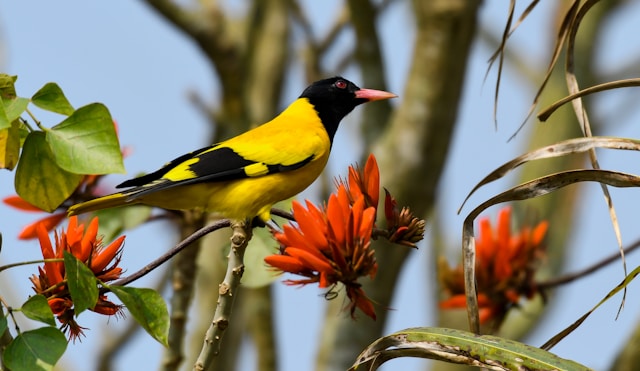
The Orchard Oriole: A Small Bird with Plenty of Charm
Of all the orioles, the orchard oriole is my personal favorite. That choice may seem unexpected because it is the smallest oriole species found in North America. It also lacks the vivid, showy coloring of Georgia’s larger and more familiar Baltimore oriole.
CRAFT · en

Exploring the Milky Way
On a dark, clear evening away from artificial lights, a soft band of silvery light can often be seen stretching across the heavens. For countless generations, people looked upon this celestial glow with awe and imagination. Different civilizations created legends to explain its presence, viewing it as a heavenly pathway, a river in the sky, or a trail left by divine beings. Modern astronomy has revealed the truth: this glowing band is our own galaxy.
CRAFT · en

10 Cute Ways To Wear A Turtleneck
Turtlenecks are a wardrobe workhorse—versatile, cozy, and endlessly stylish—but with so many cuts and fabrics to choose from, it’s easy to wonder how to make this staple shine for your unique style. Today, I’m sharing my latest obsession: a sleek black fitted mock neck turtleneck that’s been on heavy rotation lately. But that’s just the start—read on for 10 adorable, wearable ways to style turtlenecks for every occasion.
CRAFT · en

10 Famous Monet Paintings Everyone Should See
Claude Monet, the pioneer of Impressionism, has made an unforgettable contribution to the art world with his stunning paintings. From his peaceful water lilies to his lively garden scenes, Monet's works capture the essence of nature, constantly enchanting audiences. Here are ten famous Monet paintings that are truly a must - see.
CRAFT · en

Men’s Holiday Shirt Style Guide 2025: Effortless Style for Every Destination
The holiday shirt is more than just a wardrobe staple—it’s a statement of relaxation, confidence, and adaptability. Whether you’re jetting off to a sun-soaked beach, exploring a bustling European city, or embarking on a lads’ getaway, the right shirt can elevate your look while keeping you comfortable in any climate. Let’s be honest: we’ve all been there—rushing to buy new shirts before a trip, only to end up with pieces that clash with the destination, feel uncomfortable in the heat, or scream “tourist” to locals. But fear not, weary traveler: this guide is here to simplify your holiday wardrobe, helping you choose shirts that blend style, functionality, and personality. From fabric choices and fit tips to destination-specific looks and packing hacks, we’ll cover everything you need to know to dress like a seasoned globetrotter—without sacrificing comfort or individuality.
CRAFT · en

6 of the Coolest Guitars Throughout History
From acoustic instruments to electric models, guitars have played an important role in shaping the story of modern music. Electric guitars were especially influential in the rise of rock ’n’ roll during the 1950s and eventually became one of the defining symbols of the genre.