Latte Art : Beginner’s Guide

Stall note

Latte Art : Beginner’s Guide

Latte art is a beloved part of the coffee experience for enthusiasts. If you’re eager to craft your own, this beginner-friendly guide will show you how. With the right tools and a little practice, you can create beautiful designs at home.

S

Sophia Turner

Curator note

Stall tip

The full note continues below on the linen catalog desk.

Aisle

Stall Desk

Latte art is a beloved part of the coffee experience for enthusiasts. If you’re eager to craft your own, this beginner-friendly guide will show you how. With the right tools and a little practice, you can create beautiful designs at home.

What Is Latte Art?

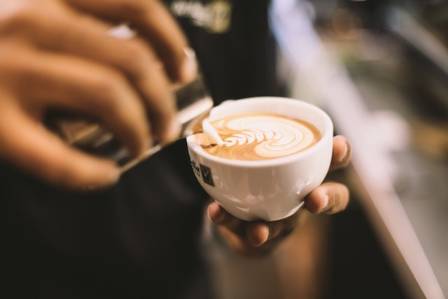
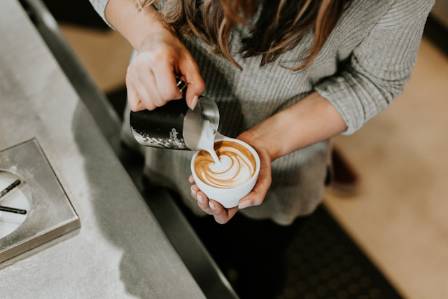
Latte art refers to the patterns or designs formed on the surface of a hot drink, created by carefully poured milk foam. The milk is steamed first to produce silky microfoam, which floats atop the coffee or other beverages, forming the signature look.

Essential Tools for Latte Art

Drink base: Espresso is traditional, but you can also use matcha or chocolate with just a touch of hot water. Thick, concentrated drinks work best. You don’t need a fancy espresso machine; a French press or other methods can suffice, as long as the liquid is rich and not watery. For a premium experience, try blends like Super Crema or La Reserva de ¡Tierra! Alteco Espresso.
Milk: Whole milk works best, though oat or soy milk can foam well. Almond milk is trickier to froth, so beginners might want to skip it.
Milk jug/pitcher: A small metal pitcher with a pointed spout helps with control.
Frother or milk steamer: Handheld or machine-based frothers both work.
Cup: Any mug of your choice.

How to Create Latte Art

Prepare your drink: Brew espresso, matcha, or chocolate in your mug.
Steam or froth the milk: Move the frother or steam wand up and down. Keeping the tip near the surface creates thick foam; too high and you’ll have bubbles.
Flat white foam: Thin, smooth, achieved by keeping the wand deep.
Latte foam: Medium thickness, froth near the surface but not too much.
Cappuccino foam: Thickest, froth longer near the surface.
Check the foam: Smooth, dense foam is ideal. Too thin = disappears; too bubbly = unstable.
Prepare the milk for pouring: Tap the jug gently on the counter or swirl it to eliminate bubbles. Hold the mug tilted toward the jug, stabilize the pour with your fingers, and start pouring.
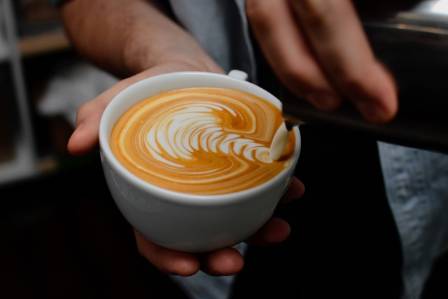
Pouring technique: Start from higher above the cup to mix milk and coffee, then lower the jug as the cup fills to control the foam for your design.

Beginner Patterns

Heart: Ideal for practice, as it teaches basic control used in more advanced designs like rosettes or swans. Pour close to the cup’s edge and move forward slowly.
Fix mistakes: Use a toothpick to reshape patterns if needed.

Tips for Success

Practice consistently; latte art improves over time.
Explore alternatives like coffee stencils—place a stencil on the cup and sift cocoa or matcha for instant designs.
Don’t worry if your first attempts aren’t perfect. Mastery comes with repetition, and once comfortable, you can experiment with more intricate designs.
With patience and practice, you’ll soon be creating visually stunning coffee drinks that are as beautiful as they are delicious.

More from this aisle

CR

CRAFT · en

Dandelion Health Benefits: Nutrition, Antioxidants, and Anti-Inflammatory Properties

Dandelion Health Benefits: Nutrition, Antioxidants, and Anti-Inflammatory Properties

Dandelion leaves, roots, and flowers provide numerous health benefits, such as supporting liver function and reducing inflammation. Though often regarded as a persistent lawn weed, dandelion has been used in traditional medicine for centuries.

CR

CRAFT · en

Most Beautiful Lakes in the World

Most Beautiful Lakes in the World

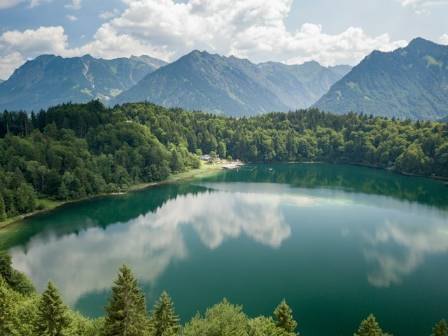
Since the earliest days of human history, people have been fascinated by lakes, whether drawn to their extraordinary scenery or intrigued by legendary creatures said to inhabit their waters, such as Nessie in Scotland and Ogopogo in Canada. Fortunately, there are countless remarkable lakes to discover, ranging from the intensely blue waters of Lake Como to the spectacular mountain scenery surrounding Moraine Lake. If you're dreaming of visiting one of the world's most beautiful bodies of water, these destinations are well worth exploring.

CR

CRAFT · en

David by Michelangelo: A Renaissance Icon

David by Michelangelo: A Renaissance Icon

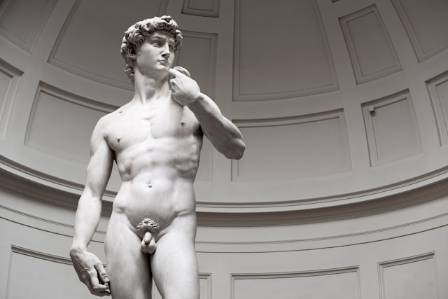
The biblical narrative of David, the youthful shepherd who conquered Goliath, captivated the imaginations of Renaissance sculptors. Yet, none reached the towering heights of fame attained by Michelangelo Buonarotti's rendition. This masterpiece stands as an exceptional work of art for a multitude of reasons.

CR

CRAFT · en

Cormorant (Phalacrocorax carbo)

Cormorant (Phalacrocorax carbo)

Historically, cormorants were almost exclusively coastal in the UK. But since the 1950s, they have increasingly colonized inland waters.

CR

CRAFT · en

Strategic Selection of Professional Women’s Suiting

Strategic Selection of Professional Women’s Suiting

Navigating the world of formal business attire is essential for professional advancement. A well-chosen interview suit serves as a neutral backdrop, ensuring that your expertise and intellect remain the focal point of a conversation rather than your clothing. In conservative industries such as finance, law, or consulting, the primary objective is to present a polished image that signifies reliability and respect for the environment.

CR

CRAFT · en

Famous Streets Around the World That Capture the Imagination  

Famous Streets Around the World That Capture the Imagination  

From historic boulevards to vibrant shopping districts, certain streets around the globe have achieved iconic status. These celebrated thoroughfares offer visitors much more than just a path from one place to another - they provide unforgettable experiences that embody the spirit of their cities. Each with its own unique character, these famous streets tell stories of culture, commerce and community through their architecture, atmosphere and daily life.