American Pika: The Tiny Mountain Survivor Facing a Changing Climate

Stall note

American Pika: The Tiny Mountain Survivor Facing a Changing Climate

Although they look soft and harmless, American pikas are among the most resilient mammals in North America.

J

julia

Curator note

Stall tip

The full note continues below on the linen catalog desk.

Aisle

Stall Desk

Description

Although they look soft and harmless, American pikas are among the most resilient mammals in North America. As the smallest members of the lagomorph family, these remarkable creatures survive in some of the harshest environments on the continent. They are one of the few mammals in the lower 48 states that spend their entire lives in alpine habitats—the cold, exposed landscapes found above the tree line where few other animals can survive.
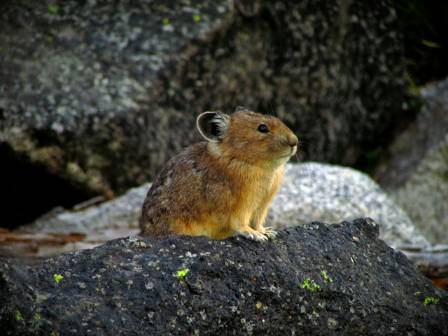
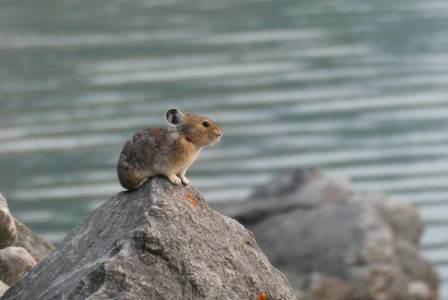
American pikas are small mammals with a mouse-like appearance. Their bodies are compact and rounded, with large circular ears and no obvious external tail. Most adults measure only around 7 to 8 inches (18–20 centimeters) in length.
Their thick brown and dark-colored fur helps them blend into rocky mountain landscapes, providing natural camouflage against stone surfaces. During winter, their dense coat provides insulation against freezing temperatures. In warmer months, pikas grow a thinner summer coat, but their heavy fur still makes them highly vulnerable to overheating when exposed to prolonged periods of extreme heat.

Range

Scientists believe that American pikas descended from ancestors in Siberia that reached North America through the ancient Bering land bridge connecting Asia and Alaska. Historically, they occupied a much wider area across the continent, but their distribution has gradually shifted upward into cooler mountain regions over the past 12,000 years.
Today, American pikas are mainly found in high-elevation mountain habitats west of the Rocky Mountains. Their range includes parts of Montana, Wyoming, Colorado, Idaho, Washington, Oregon, California, Nevada, Utah, New Mexico, and western Canada.
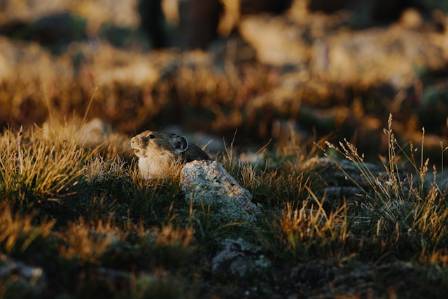
These small mammals typically inhabit alpine environments above the tree line, especially rocky slopes, cliffs, and talus fields—areas made up of loose rock fragments near mountain meadows. While most populations in the lower 48 states depend on cold alpine ecosystems, some groups survive at lower elevations where naturally cool environments exist, such as underground ice caves in California’s Lava Beds National Monument.
Despite their remote habitats, pikas face threats from predators including weasels, hawks, and coyotes.

Diet

American pikas are plant-eating mammals that rely almost entirely on vegetation found in their mountainous homes. Their preferred foods include grasses, wildflowers, herbs, and other alpine plants.
Because winter dramatically reduces available vegetation in high mountains, pikas prepare carefully during the warmer months. Throughout summer, they gather and store large amounts of plants in piles near their shelters. These collections are often called “haypiles.”
Before storing the vegetation, pikas spread grasses and flowers in sunny locations to dry them naturally, reducing the risk of mold growth. These dried plant supplies remain inside their rocky shelters and provide essential food throughout the cold winter season.

Behavior

American pikas have developed unique adaptations that allow them to survive in extreme alpine environments where temperatures are low, winds are strong, and landscapes are dominated by exposed rock.
Because their habitats are dangerous and isolated, pikas often live in small colonies. They rely on communication to protect themselves, producing sharp warning calls whenever predators approach. These vocal signals alert nearby individuals to potential danger.
Although they live close together, pikas are highly territorial animals. Each individual protects its own rocky shelter and surrounding feeding area. They use specific calls to establish boundaries and communicate with neighboring pikas.
Unlike many small mammals, American pikas do not hibernate. They remain active throughout the year, although they spend more time inside their shelters during winter. Their survival depends heavily on the food stores collected during summer, and they only leave their dens when weather conditions allow them to forage.

Life History

American pikas begin their breeding season in early or mid-spring. Many females reproduce twice during the year, producing one litter in spring and another in summer.
After a pregnancy period of approximately one month, females give birth to litters containing two to six young. Newborn pikas are completely dependent on their mothers and cannot survive independently. They require several weeks of parental care before becoming more self-sufficient.
Young pikas are usually weaned after about one month and reach adult body size after approximately three months. Around one year later, they become capable of reproduction.
Although some American pikas can survive six to seven years, many individuals live only three to four years in the wild.

Conservation

For many years, polar bears have represented the global concern surrounding climate change. However, American pikas have increasingly become another important symbol of climate-related threats because of their extreme sensitivity to rising temperatures.
Climate change is affecting the cool mountain environments where pikas live. In some areas, including parts of Oregon and Nevada, American pikas have already disappeared from more than one-third of their historically recorded habitats.
Despite these declines, the species is not currently protected under the U.S. Endangered Species Act. Scientists warn that without conservation measures, American pikas could become one of the earliest mammals to disappear because of climate-driven environmental changes.
Pikas depend on cold, moist alpine ecosystems. They have evolved to survive in places where temperatures rarely rise above freezing, but they can suffer fatal heat stress when exposed to temperatures around 78°F (26°C) for extended periods.
Many mountain species can respond to warming conditions by moving higher, but pikas already occupy the highest parts of mountains. As temperatures continue rising, they have fewer opportunities to find suitable habitats.
Climate change creates additional challenges for alpine wildlife, including changes in plant communities, increased competition from new species, expanding predators and pests, reduced snow cover during winter, and more frequent extreme weather events.
In the Great Basin region, located between the Rocky Mountains and California’s Sierra Nevada, scientists have already documented declines in pika populations. Researchers believe these changes may serve as an early warning sign for broader impacts affecting other mountain species, including insects, birds, and larger mammals.

Interesting Fact

American pikas are often detected by sound before they are actually spotted. They communicate through a variety of calls used for defending territory, warning nearby individuals about predators, and attracting mates.
Their distinctive voice is often compared to the sound of a tiny lamb, but it is much higher-pitched and more squeaky.
 

More from this aisle

CR

CRAFT · en

Comprehensive Global Insights into Shoreline Bluff Degradation through Bibliometric Mapping and Systematic Literature Evaluation

Comprehensive Global Insights into Shoreline Bluff Degradation through Bibliometric Mapping and Systematic Literature Evaluation

Steep rocky shores constitute approximately eighty percent of the global coastline and undergo significant transformation driven by an array of environmental and human activities. Marine wave dynamics serve as the primary engine for this degradation, making these landforms highly vulnerable to accelerating sea levels and severe weather patterns linked to climate change. Due to these pressing concerns, academic interest in coastal bluff stability has surged over recent decades. To properly map this expanding scholarly domain, a quantitative literature assessment offers an effective strategy to discover hidden research frameworks from vast publication datasets. Prior to this study, a comprehensive global bibliometric evaluation of this specific field in the English language was entirely absent.

CR

CRAFT · en

World’s Most Renowned Sculptural Masterworks

World’s Most Renowned Sculptural Masterworks

Sculpture has long offered humanity incredible expressions of artistry across eras. Whether rendered in marble, bronze, or stone, these creations embody cultural and aesthetic milestones. This article introduces the ten sculptures that have earned worldwide renown—timeless treasures celebrated for their history, technique, and emotional impact.

CR

CRAFT · en

French Soufflé Recipe

French Soufflé Recipe

If you want a dessert that truly impresses, this authentic French soufflé is a perfect choice. Famous for its delicate rise and cloud-like texture, it delivers both elegance and rich flavor in every spoonful. Despite its refined appearance, it’s surprisingly achievable at home with simple ingredients and careful technique. Whether you’re cooking for guests or treating yourself, this soufflé brings a touch of French sophistication to your kitchen.

CR

CRAFT · en

Enhancing Summer Gatherings with Vibrant Berry-Infused Cocktails

Enhancing Summer Gatherings with Vibrant Berry-Infused Cocktails

Professional mixologists consistently argue that the secret to a superior drink lies in the quality of its components. During the warmer months, seasonal produce takes center stage, transforming standard hosting plans into memorable culinary experiences. While citrus staples like lemons and limes provide necessary acidity throughout the year, the arrival of summer allows for a sensory reinvention of timeless favorites. Traditional recipes such as Margaritas, Mojitos, Sangrias, and Daiquiris gain a newfound energy and brightness when integrated with fresh fruit. These natural ingredients do more than just improve the flavor profile; they introduce a lively aesthetic that can be achieved through simple techniques like juicing, muddling, or thoughtful garnishing.

CR

CRAFT · en

A Guide to the World's Five Most Preferred Coffee Drinks

A Guide to the World's Five Most Preferred Coffee Drinks

Across the globe, the coffee landscape is vast, yet five specific preparations consistently stand out as the most beloved choices for enthusiasts. These quintessential beverages—Espresso, Americano, Latte, Cappuccino, and Macchiato—form the foundation of modern coffee culture. Each drink provides a distinct sensory experience, ranging from the intense and concentrated to the smooth and creamy, ensuring there is an ideal option for every palate.

CR

CRAFT · en

15 Interesting and Fun Facts About Grey Wolves

15 Interesting and Fun Facts About Grey Wolves

Here’s a fact to start with: grey wolves are among the most widely distributed land mammals on Earth, yet many of their populations face severe threats. Because they live in so many different ecosystems and sit at the top of the food chain, the health of grey wolf groups is a critical indicator of our planet’s overall health.