Thousands of years ago, a unique horse known as the takhi lived across the grasslands of Asia and Europe. The animal later became known as Przewalski’s horse after Russian explorer Nikolai Przewalski studied and documented its remains during the late 19th century. The name is commonly pronounced as “shuh-VAL-skee.”
However, within less than a century, these horses disappeared from the wild. Severe winters, limited genetic diversity caused by inbreeding, and intensive hunting contributed to their decline. The last confirmed wild individuals were observed during the late 1960s.
Through carefully managed captive breeding programs, Przewalski’s horses have since been returned to parts of their former range. Despite these conservation successes, they are still considered an endangered species.
Are Przewalski’s Horses Truly Wild?
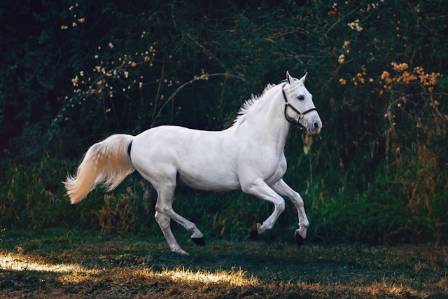
Przewalski’s horses have often been described as the world’s last truly wild horses, making them an important symbol of wildlife conservation.
However, scientific research has raised questions about this classification. A 2018 genetic study suggested that these horses may have descended from ancient domesticated horses that later returned to a free-living lifestyle. If this interpretation is correct, they could technically be considered feral rather than completely wild.
Regardless of their classification, Przewalski’s horses remain extremely valuable because they preserve unique genetic characteristics within the horse family.
Today, only around 2,000 individuals remain, and conservation programs continue working to increase their population
Social Behavior and Reproduction
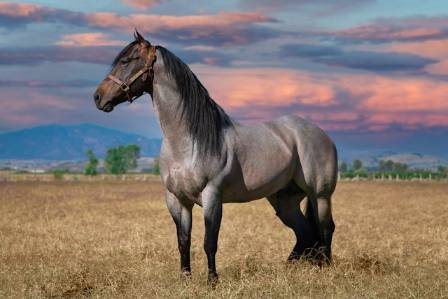
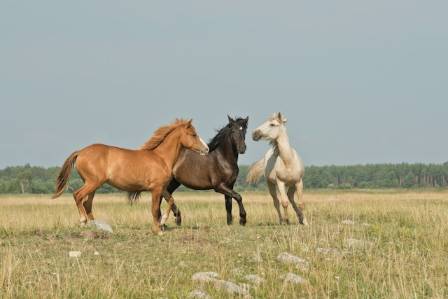
Like most horses, Przewalski’s horses are social animals and do not usually live alone. They commonly form groups known as harems, which usually include one dominant stallion, several adult females, and their young.
Young horses usually leave their birth group when they reach reproductive maturity, generally between one and four years old. After leaving, they typically do not remain solitary. Young females often join another harem, while young males usually gather together in groups known as bachelor herds.
Male horses may stay in bachelor groups until they become strong enough to establish their own harem. Larger bachelor groups can sometimes split into smaller groups.
Although dominant stallions usually defend their females against outside males, researchers have also observed unusual social interactions, including stallions occasionally engaging with bachelor groups. Such behavior appears uncommon, while play behavior among members of harems is much more frequently recorded.
Female Przewalski’s horses give birth to a single foal after a pregnancy lasting approximately 11 months. Newborn foals develop quickly; within their first day, they are already able to walk, trot, and make vocal sounds. After about one month, they begin playing with other young horses in their group.
Some groups remain as separate harems, while others combine into larger herds. Recent studies using drone monitoring suggest that family relationships, including connections between siblings, may influence how closely different harems stay together.
Habitat and Diet
Historically, Przewalski’s horses occupied the wide grasslands and steppes of Asia and Europe. As agriculture expanded, their habitat became increasingly restricted, forcing populations farther east.
Their final wild refuge was believed to be the Gobi Desert region of Mongolia, an area containing grasses and shrubs that provided food sources for these horses. The last wild sightings occurred there during the 1960s.
Today, their diet mainly consists of grasses and leafy plants. However, historical evidence shows that their feeding habits changed with the seasons. During summer, they mainly grazed on grasses, while in winter they relied more heavily on woody vegetation.
Reintroduced populations do not always follow these same seasonal feeding patterns. Scientists suggest this may be related to changes in their environment and the fact that modern populations no longer face the same winter hunting pressures that once influenced their ancestors.
Conservation and Recovery Efforts
Every Przewalski’s horse alive today can trace its ancestry back to only about 12 individuals that were captured before the species disappeared from the wild.
Even before their extinction in nature, international zoo breeding programs had already begun protecting these horses. Captive populations were protected from threats such as hunting and interbreeding with domestic horses, allowing their numbers to slowly recover.
Beginning in the early 1990s, conservation organizations started returning Przewalski’s horses to suitable habitats in Mongolia, China, and Russia.
At the beginning of the 21st century, more than 30 horses were also introduced into the Chernobyl exclusion zone. This population nearly doubled within approximately ten years, demonstrating the species’ ability to recover under suitable conditions.
However, genetic diversity remains one of the greatest challenges because modern Przewalski’s horses descended from such a small founder population.
To address this problem, scientists have explored advanced genetic techniques, including cloning. Using preserved cells collected from a stallion in 1980, researchers successfully created cloned Przewalski’s horse foals in 2020 and again in 2023.
Because the cloned horses contain genetic material that is no longer present in the current population, they may help increase genetic diversity when they reproduce with existing Przewalski’s mares.
Increasing genetic variation is an important step toward rebuilding the lost diversity of this ancient horse and improving the long-term survival prospects of future generations.