
Stall note
The Global Domination of Coffee
Ethiopia, nestled in East Africa, boasts a diverse landscape ranging from arid desert lowlands to fertile subtropical highlands. It is renowned as the birthplace of coffee, a beverage that has woven its way into the very fabric of human culture, transcending borders and uniting people from diverse corners of the world. Like the indomitable march of humanity, coffee's journey was unstoppable, leaving no region untouched.
Gabriel Jude
Curator note
Stall tip
The full note continues below on the linen catalog desk.
Aisle
Stall Desk
Ethiopia, nestled in East Africa, boasts a diverse landscape ranging from arid desert lowlands to fertile subtropical highlands. It is renowned as the birthplace of coffee, a beverage that has woven its way into the very fabric of human culture, transcending borders and uniting people from diverse corners of the world. Like the indomitable march of humanity, coffee's journey was unstoppable, leaving no region untouched.

Today, coffee is not merely a beverage; it's almost a religious devotion. Every coffee enthusiast partakes in their daily ritual of preparation, brewing, and savoring this liquid elixir. The world consumes around 2 billion cups of this revered drink each day. Just like the origin myths that underpin religious beliefs, coffee has an enchanting creation story that echoes across time.
The tale of coffee's origins varies across cultures, but in Ethiopia, a captivating legend persists. According to this narrative, coffee was first stumbled upon by a goat herder and musician named Kaldi. His days were spent crafting melodious tunes on a rustic pipe while his goats roamed the mountainside in search of nourishment. With the onset of dusk, he would summon his flock with a distinctive note from his pipe, and they would dutifully follow him home. However, one day, his loyal goats defied this routine.
Kaldi embarked on a quest to locate his wayward goats, only to discover them in a state of spirited excitement, almost dancing. As he observed this peculiar display, he realized that his goats were feasting on the leaves and berries of a previously unnoticed plant. He surmised that this newfound sustenance was the source of their exuberance and decided to partake in it himself. These berries infused him with newfound energy, leading him to dance alongside his jubilant goats.
Kaldi's story introduces the concept of coffee rejection by a figure of authority even before the beans underwent roasting. It is said that Kaldi presented the berries to a holy man, who sampled them and hastily threw them into a fire, deeming them unholy. Yet, the moment these beans started to crackle, emitting a tantalizing aroma, their potential was realized. The legend narrates that the beans were rescued from the embers, ground into a fine powder, and steeped in water.
While the story of Kaldi, the Goatherd, may contain elements of truth, it also harbors the charm of folklore. Coffee, however, is not an exclusive creation of Ethiopia. It thrives abundantly throughout sub-Saharan Africa, spanning from Madagascar in the east to Sierra Leone in the west, meandering through the jungles of Congo, descending south to Zimbabwe, and ascending north to Ethiopia. A more scientific perspective argues that the true genesis of coffee is closely tied to the digestive tracts of African civets.
Civets would ascend coffee trees to relish the ripest berries. They digested the outer flesh but expelled the green bean through their digestive process. This mechanism facilitated the migration of coffee plants as civets roamed, earning them credit for propagating the natural growth of coffee plants in Africa. Ethiopians emerged as the first known cultivators of coffee. It remains uncertain whether other regions in Africa saw the early flourishing of coffee, as Ethiopians did. Nevertheless, it is improbable that Ethiopians immediately embarked on the processes of bean roasting, grinding, and brewing to create the iconic coffee beverage.
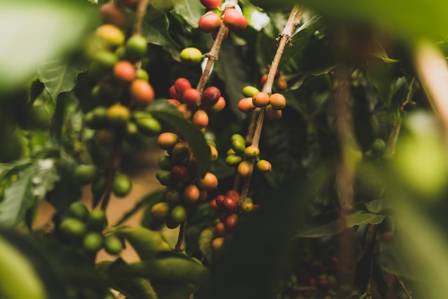
In the initial phases of coffee plant usage, people consumed coffee beans as they were or concocted a weak tea from the leaves. The evolution from simple ingestion of beans and leaves to the roasting and grinding of beans for a brewed beverage can be attributed, in part, to the exigencies of war.
Humans exhibit an inherent affinity for three things: passion, libations, and combat. Coffee aligns seamlessly with all three of these proclivities.
As soon as Ethiopians discovered that coffee berries were palatable - perhaps through observing their goats' lack of ill effects - they began to incorporate it into their diet. Given its fruit-like nature, it also lent itself to the creation of alcoholic beverages, as humans have a penchant for fermenting almost anything.
However, military necessity likely played a significant role in the development of roasted coffee beans. The Oromo tribes of Ethiopia, notorious highland raiders, boasted extraordinary efficiency on the battlefield, partly due to their unique sustenance. While other armies adhered to traditional meals, Oromo warriors concocted a blend of coffee beans, animal fat, and seeds, an early precursor to the modern energy bar. Roasting beans was vital for their long-lasting freshness, a critical aspect of campaigns. These early coffee energy bars provided an Oromo warrior with sustenance for an entire day, yet the exact moment and method of the beans being ground and infused with hot water remain elusive.
Irrespective of the particulars, it is undeniable that coffee has fueled armies for over a millennium. From the moment it was embraced by humanity, coffee beans became the seeds of conquest and revolution. Kings, chieftains, and religious leaders alike attempted - futilely - to suppress its use. Coffee possesses the unique ability to unite and invigorate people. The intrepid warriors of Ethiopia may well have been the first to venture beyond their borders with coffee in tow.
The modern nation of Yemen, situated on the opposite shores of the Red Sea from East Africa, holds historical significance. In the year AD 520, much of this region was part of the Aksumite Kingdom, a formidable empire that rivaled the Persian empire. During that era, Kaleb of Axum dispatched forces that toppled the government of a Jewish kingdom in Yemen and appointed a viceroy who reigned for approximately five decades.
Some historians propose that the Aksumites might have cultivated coffee during this period. While there is no definitive proof either way, the absence of written European documentation should not preclude the possibility. The subsequent recapture of the region by the Persians is thought to have allowed them to retain coffee cultivation.
If the warriors of Aksum had not yet embraced coffee (as the first written Arab references to coffee would not appear until four centuries later), coffee could have spread to Yemen through trade with the Arabian Peninsula. Regardless of the route, coffee was swiftly embraced by the Arabs. Over the next few centuries, they established coffee plantations and intricate irrigation systems in Yemen.
By the time the Prophet Muhammad passed away in 632, he had succeeded in converting much of the Arabian Peninsula to Islam. The Islamic empire's prohibition of intoxicants added an extra layer to the burgeoning coffee culture. Some Islamic accounts propose that coffee was a gift from the Archangel Gabriel. The use of coffee was further promulgated by Sufi mystics who found that it kept them alert during their late-night studies and prayers. They referred to it as "qawah," the Arabic term for "wine," which is the origin of the word "coffee."
From the Yemeni port of Mocha, coffee embarked on its journey throughout the Islamic world. Despite the efforts of various religious and civil leaders to ban coffee consumption (often under the threat of execution by an enormous sword), coffeehouses emerged in Mecca, Cairo, and Istanbul by the end of the 15th century.

The Ottoman Turks made an attempt to monopolize coffee cultivation, but their efforts were ultimately in vain. By the early 17th century, Europeans had joined the coffee revolution,
More from this aisle
CRAFT · en

Identifying Lunar Irregularities: The Role of Artificial Intelligence in Modern Moon Research
Artificial intelligence is fundamentally changing the methodology of lunar exploration. By leveraging advanced computational models, researchers are now able to identify unusual surface features on the Moon with unprecedented speed and accuracy. This shift toward automation is essential for modern planetary science, as it allows experts to process vast amounts of data that would be impossible for human teams to review manually. The transition to AI-driven analysis marks a significant milestone in our quest to understand the geological and potentially technological history of our closest celestial neighbor.
CRAFT · en

How Do You Choose A Vanity That's Easy To Clean?
A bathroom that is easy to keep clean begins with choosing the right vanity. This decision is sometimes overlooked, yet it has a direct impact on hygiene, longevity, moisture resistance, and the amount of effort required for everyday cleaning. Beyond appearance, selecting suitable materials, finishes, and practical features can help prevent buildup, limit moisture-related problems, and make routine maintenance much easier.
CRAFT · en

The Versatile World of Box Robots: Design, Engineering, and Practical Uses
Box robots, characterized by their distinct television-like or cubic chassis, represent one of the most versatile platforms in modern robotics. Combining a structural foundation—the "box"—with modular electronics, these machines bridge the gap between simple DIY crafts and sophisticated industrial tools. Their geometric stability and internal volume make them ideal for housing complex sensors and processors, serving as a primary gateway for STEM education and rapid prototyping.
CRAFT · en

The World's Newest Architectural Marvels: Your Guide to Top Projects
Today we invite you to embark on this exciting voyage and explore the groundbreaking architectural wonders. Believe us, it will be an exciting journey through different countries of the world! We will visit the United Arab Emirates, the USA, mysterious Australia and China.
CRAFT · en

Scarlet Tanager: The Red Bird Hidden in the Forest
The Scarlet Tanager is a striking, medium-sized songbird that is roughly comparable in size to a Baltimore Oriole, with a body length of about 16–17 cm. During the breeding season, the male is especially eye-catching, featuring vivid red plumage and a red tail contrasted by deep black wings and a pale-colored bill.
CRAFT · en

Master the Craft: Essential Strategies for Perfect Homemade Dumplings
In many cultures, the act of assembling dumplings is more than just meal preparation; it is a rhythmic meditation and a cherished family tradition passed down through generations. While the beautifully pleated creations seen on social media can feel intimidating, the reality is that dumplings are one of the most accessible foods to make at home. The secret lies not in instant perfection, but in the willingness to practice. Even if your first few attempts appear a bit irregular, they will still provide a delicious and satisfying reward.