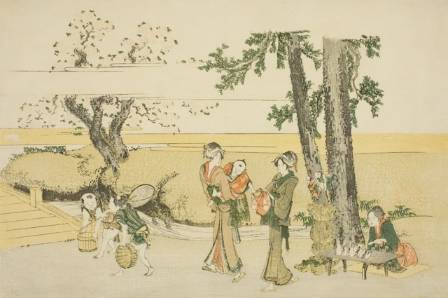
Ten Essential Ukiyo-e Woodblock Prints

Stall note

Ten Essential Ukiyo-e Woodblock Prints

Ukiyo-e, the "pictures of the floating world," are Japanese woodblock prints that flourished during the Edo period (1603-1868). This art form achieved mass production, making beautiful and influential images widely accessible. The prints captured the popular culture of the time, from beautiful women and kabuki actors to dramatic landscapes and legendary heroes. The following ten works are among the most important and iconic in the history of Ukiyo-e.

A

Avery Ches

Curator note

Stall tip

The full note continues below on the linen catalog desk.

Aisle

Stall Desk

Ukiyo-e, the "pictures of the floating world," are Japanese woodblock prints that flourished during the Edo period (1603-1868). This art form achieved mass production, making beautiful and influential images widely accessible. The prints captured the popular culture of the time, from beautiful women and kabuki actors to dramatic landscapes and legendary heroes. The following ten works are among the most important and iconic in the history of Ukiyo-e.

1. "The Great Wave off Kanagawa" by Katsushika Hokusai (c. 1830-32)

Part of the series Thirty-six Views of Mount Fuji, this is arguably the most famous Japanese artwork in the world. It depicts a colossal, claw-like wave threatening boats with Mount Fuji serenely in the background. The dynamic composition, use of Prussian blue, and blend of human struggle with nature's sublime power made it immensely influential in both Japan and the West.

2. "The Plum Garden at Kameido" by Utagawa Hiroshige (1857)

From the series One Hundred Famous Views of Edo, this print features the gnarled, famous "Sleeping Dragon" plum tree. Hiroshige uses a bold, close-up perspective, framing the blossoms and visitors within the tree's branches. Its distinctive composition and delicate beauty were so admired that Vincent van Gogh painted a direct oil copy of it in 1887.

3. "Seba" from The Sixty-nine Stations of the Kisokaidō by Utagawa Hiroshige (c. 1830s)

This landscape print is a masterclass in atmosphere and daily life. It shows travelers at a post station at dusk, with the soft glow of lanterns reflecting on water. Hiroshige excelled at capturing subtle moods, seasons, and the quiet moments of journeying, making ordinary scenes profoundly poetic and inviting.

4. "The Dream of the Fisherman's Wife" by Katsushika Hokusai (1814)
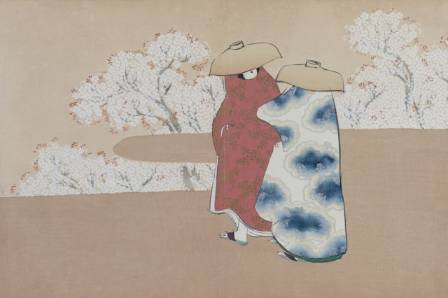
A famous example of shunga (erotic art), this print is part of the book Kinoe no Komatsu. It depicts a woman entwined with two octopuses. While explicit, it is also a masterpiece of composition and symbolic fantasy, blending humor, eroticism, and mythical imagery. It reflects the creative ways artists explored themes under period censorship.

5. "The Teahouse Waitress Takashima Ohisa" by Katsukawa Shunchō (c. 1790s)

This portrait epitomizes the bijinga (beautiful women) genre. It depicts a celebrated beauty, Ohisa, using a fan bearing her crest. The print highlights contemporary fashion and ideal feminine grace. The background is dusted with sparkling mica powder, a luxurious detail that enhances her allure and the print's status as a desirable object.

6. "Actor Ōtani Oniji III as Edobei" by Tōshūsai Sharaku (1794)

Sharaku was a brief but brilliant master of yakusha-e (actor portraits). This print captures the kabuki actor Ōtani Oniji III in a villainous role, his face contorted in a dramatic grimace. Sharaku's unflinching, almost caricature-like focus on intense expression broke conventions and created some of the most psychologically powerful portraits in Ukiyo-e.

7. "The Sea at Satta in Suruga Province" by Utagawa Hiroshige (1859)

From the later series Thirty-six Views of Mount Fuji, this print is a direct homage to Hokusai's Great Wave. It features a towering, curling wave viewed from a high vantage point on the Satta Pass, with a panoramic vista of the ocean and Mount Fuji beyond. It demonstrates the enduring influence of Hokusai's landscape vision.

8. "Evening Glow at Ryōgoku Bridge" by Torii Kiyonaga (c. 1782)
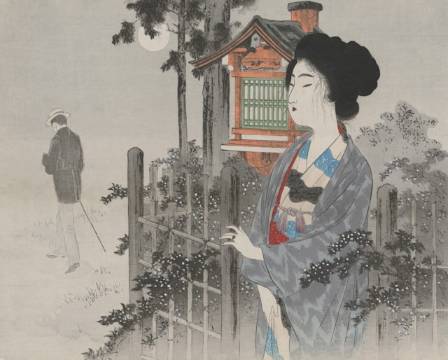
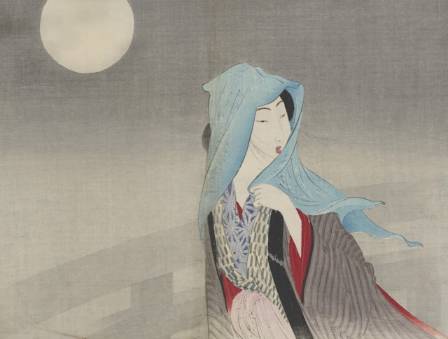
From the series Eight Views of the Parlor, this print uses a unique circular format, mimicking a Western peepshow or telescope view. It shows elegantly dressed women on a bridge at sunset. Kiyonaga was renowned for his tall, stately female figures and his incorporation of Western perspective, which created a sense of sophisticated, modern depth.

9. "Toki Jūrōzaemon Mitsuchika" by Utagawa Kuniyoshi (c. 1848-50)

A prime example of musha-e (warrior prints), this work is from the series Heroes of the Great Peace. It depicts a legendary samurai, Toki Mitsuchika, in a dynamic, desperate struggle. Kuniyoshi was a master of dramatic narrative and detailed armor, often using historical and legendary subjects to convey themes of bravery and loyalty that resonated with contemporary audiences.

10. "View of Maruyama in Nagasaki" by Utagawa Hiroshige II (1859)

This print, from the series One Hundred Famous Views of the Various Provinces, encapsulates several Ukiyo-e themes. It depicts the Nagasaki pleasure quarter, with courtesans in the foreground and Dutch-style architecture in the background. It reflects Japan's limited interaction with the outside world and the artist's continued experimentation with spatial depth and cultural contrast.

The Legacy of Ukiyo-e

These ten works represent the pinnacle of a transformative art form. They were not just popular images but also sophisticated artistic statements that influenced composition, color use, and subject matter worldwide. When Japanese prints arrived in Europe in the 19th century, they profoundly impacted artists like Van Gogh, Monet, and Whistler, contributing directly to the development of Impressionism and Art Nouveau. The genius of Ukiyo-e lies in its ability to capture the fleeting beauty of the everyday "floating world," a legacy that continues to resonate in global art and design.

More from this aisle

CR

CRAFT · en

Identifying Lunar Irregularities: The Role of Artificial Intelligence in Modern Moon Research

Identifying Lunar Irregularities: The Role of Artificial Intelligence in Modern Moon Research

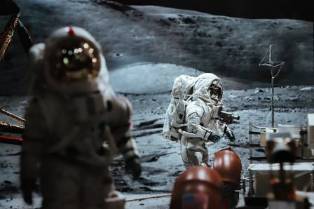
Artificial intelligence is fundamentally changing the methodology of lunar exploration. By leveraging advanced computational models, researchers are now able to identify unusual surface features on the Moon with unprecedented speed and accuracy. This shift toward automation is essential for modern planetary science, as it allows experts to process vast amounts of data that would be impossible for human teams to review manually. The transition to AI-driven analysis marks a significant milestone in our quest to understand the geological and potentially technological history of our closest celestial neighbor.

CR

CRAFT · en

Key Attributes of the Ideal Winter Hoodie

Key Attributes of the Ideal Winter Hoodie

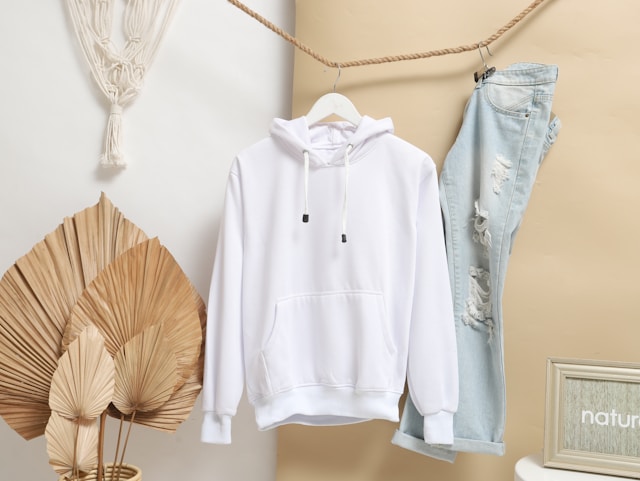
The perception of the hoodie has shifted dramatically in recent years. No longer a garment associated with a suspicious reputation or niche subcultures, the hooded sweatshirt has achieved universal acceptance. Today, it is a staple for all generations, finding its way into both casual wardrobes and professional settings where traditional dress codes have softened. Even high-ranking government officials have been seen utilizing the comfort of a hoodie during intensive work sessions. Global demand continues to surge as it evolves from a specialty item into a fundamental necessity.

CR

CRAFT · en

The vision of women in ancient Chinese art

The vision of women in ancient Chinese art

Cai Qin, vice director of the Zhejiang Provincial Museum, recently delivered a series of talks in Hangzhou, Tianjin, Suzhou, and Ningbo, discussing how women were depicted in historical Chinese paintings.

CR

CRAFT · en

All You Need to Know Before Purchasing an SUV​

All You Need to Know Before Purchasing an SUV​

An SUV is an excellent option for anyone seeking a vehicle that offers more room than a sedan and more enjoyment than a minivan. Let’s take a moment to go over what you should keep in mind when purchasing an SUV.​

CR

CRAFT · en

10 Iconic Sculptures Every Art Enthusiast Should Know

10 Iconic Sculptures Every Art Enthusiast Should Know

One of the earliest surviving artworks, the Venus of Willendorf remains an enigma. We have no way of knowing why, how, or for what purpose it was created. Some researchers theorize it was a fertility goddess idol, a religious relic, a personal object, or even a self-portrait by its maker.

CR

CRAFT · en

Guide To The World’s Biggest Waves

Guide To The World’s Biggest Waves

Riding giant waves demands a rare blend of courage, skill, and determination. Whether paddling into towering walls of water or releasing the tow rope on waves approaching 100 feet, big-wave surfers share a mindset that refuses to back down when conditions become extreme.